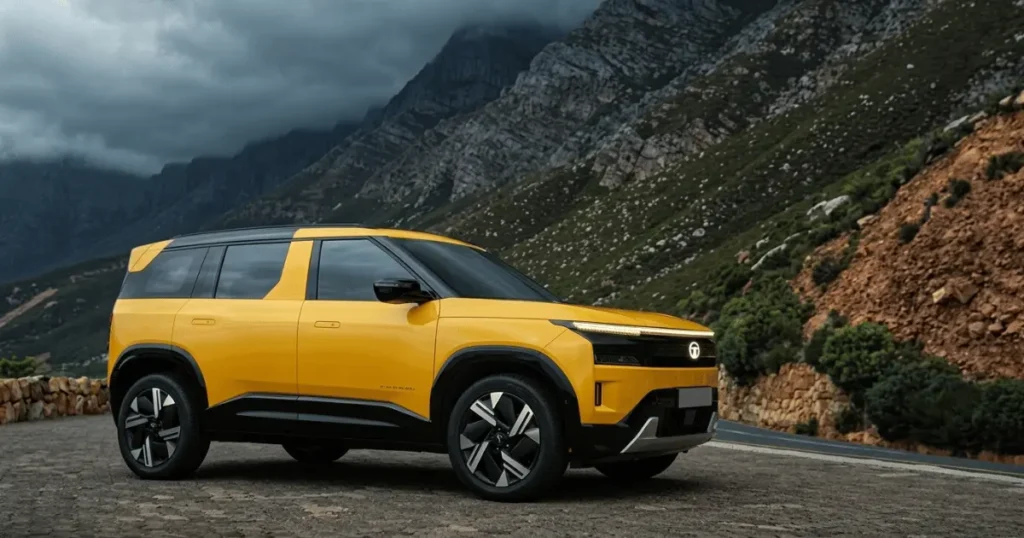
The new Tata Sierra represents one of the most thoughtfully engineered modern SUVs to come from Tata Motors. Unlike a typical product update, the Sierra has been reimagined from the ground up with a clear intention—to combine emotional design with real-world usability and future-ready engineering. What makes the Sierra truly stand out is not just its nostalgic connection to the past but the way it translates that legacy into a contemporary SUV that feels premium, spacious, and technologically advanced.
This is not a surface-level vehicle. Every aspect, from its proportions to its platform and powertrain choices, has been developed with a strong understanding of Indian driving conditions and customer expectations. When you evaluate the Sierra closely, you begin to realize that it is not just about specifications but about how those specifications translate into everyday comfort, drivability, and practicality.
tata Sierra Front design
Lorem ipsum dolor sit amet, consectetur adipiscing elit. Ut elit tellus, luctus nec ullamcorper
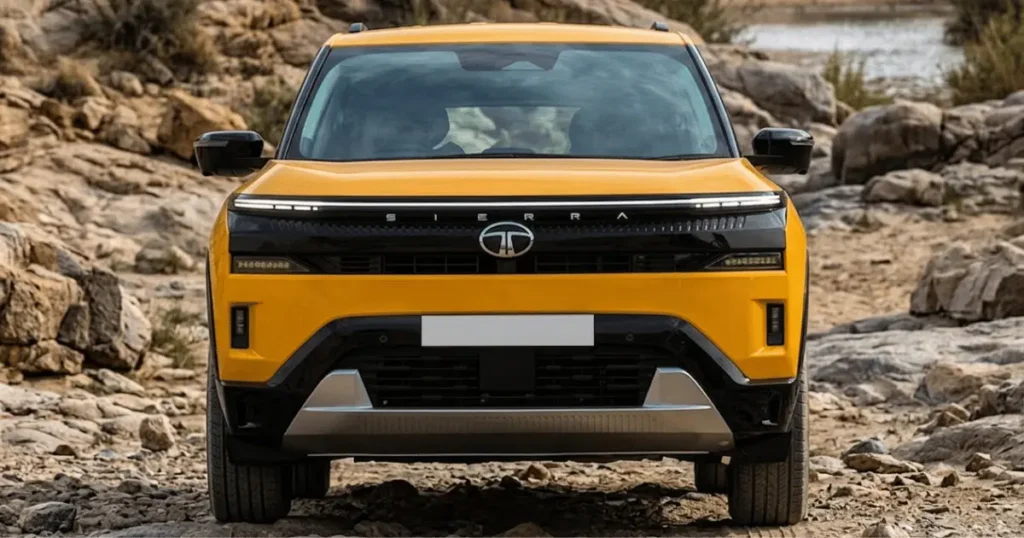
The front design of the new Tata Sierra immediately establishes its futuristic identity while maintaining a sense of strength expected from an SUV. Tata Motors has moved away from conventional bulky SUV styling and adopted a cleaner, more aerodynamic approach that feels inspired by concept vehicles rather than traditional production designs.
At the very first glance, the full-width LED DRL strip becomes the defining element. This sleek light bar runs across the entire width of the front fascia, visually stretching the vehicle and giving it a wider, more planted stance. It creates a strong road presence, especially at night, where the lighting signature feels modern and premium.
Below this DRL, the Sierra features a split headlamp arrangement, where the main LED projector units are placed lower on the bumper in a vertically stacked format. This layout adds depth and character to the front profile, making the SUV look more muscular without appearing aggressive. The positioning of the headlamps towards the edges further enhances the width perception of the vehicle.
The grille area is intentionally kept minimal, especially in the electric version, where airflow requirements are lower. Instead of a large traditional grille, Tata uses clean surfaces and textured elements to create a refined appearance. The bumper is sculpted with sharp lines and subtle aerodynamic contours, giving the Sierra a balanced look that combines sophistication with ruggedness. Overall, the front design feels modern, confident, and aligned with global design trends.
attis, pulvinar dapibus leo.
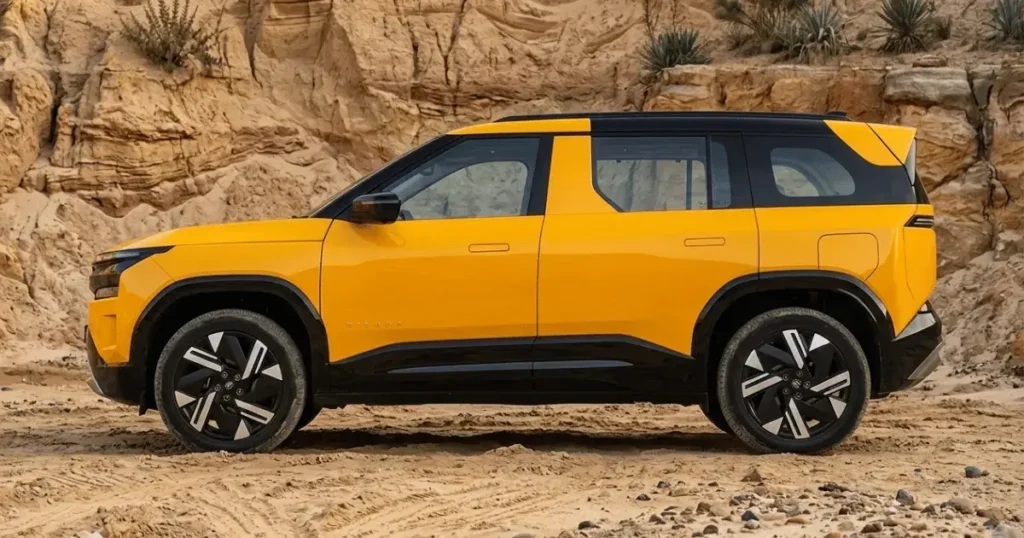
Tata Sierra Side profile
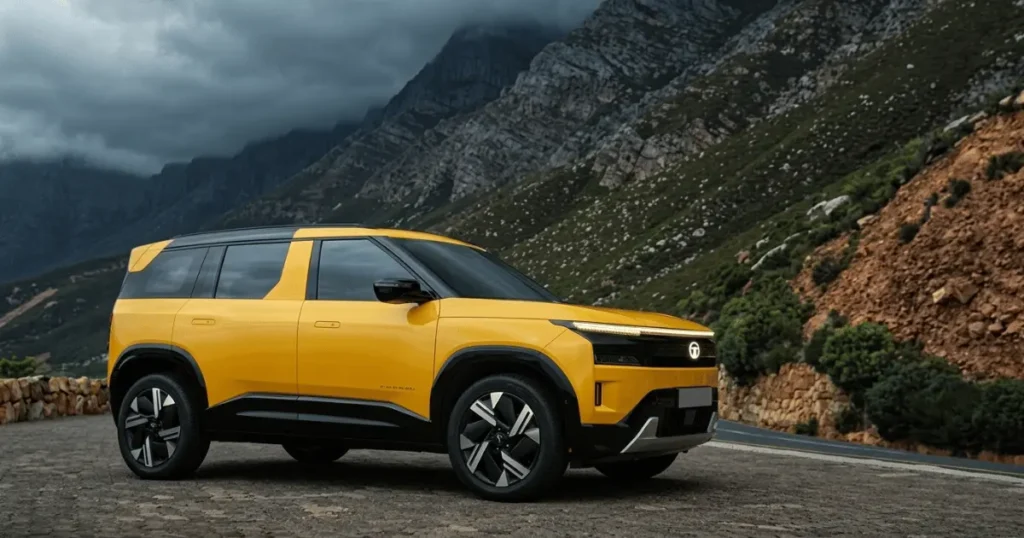
The side profile is where the Sierra truly differentiates itself from every other SUV in the market. It carries forward the iconic design language of the original Sierra while adapting it to a modern context.The most striking feature is the extended rear glass panel, which forms a unique glasshouse design. This element is not just a styling highlight but also plays a functional role by allowing more natural light into the cabin. The result is an interior that feels significantly more open and airy compared to conventional SUVs.The overall silhouette is upright and well-proportioned, giving the Sierra a commanding presence on the road. The long wheelbase and tall stance contribute to both aesthetics and practicality. The straight roofline ensures excellent headroom for passengers, while the blacked-out pillars create a floating roof effect that adds a touch of sportiness.The character lines along the doors are sharp yet clean, adding depth to the body without making the design overly complicated. The wheel arches are pronounced and house large alloy wheels, which enhance the SUV’s stance and road presence. Roof rails further reinforce the rugged identity of the Sierra while also adding functional value for long-distance travel.
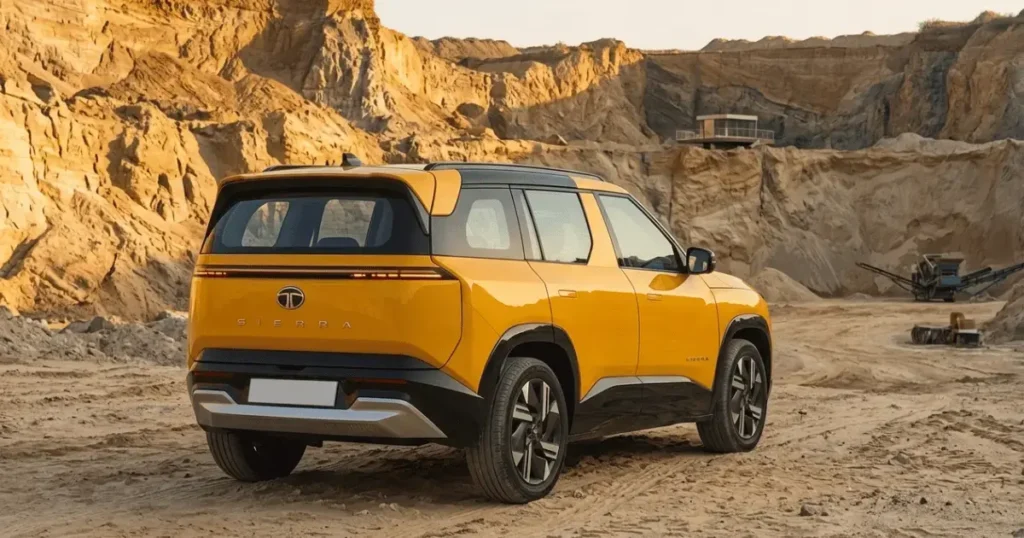
Tata Sierra Rear Profile
The rear profile of the Tata Sierra continues the theme of modern simplicity combined with strong visual identity. Tata has focused on creating a clean and wide appearance that looks premium from every angle.The connected LED tail lamp setup is the most prominent feature at the rear. A continuous light bar runs across the width of the tailgate, linking the two tail lamps and creating a distinctive lighting signature. This not only improves visibility but also adds a futuristic touch, especially during night driving.The tailgate itself is designed with clean surfaces and minimal clutter. The “SIERRA” branding is placed prominently, reinforcing the vehicle’s identity. The absence of excessive design elements helps maintain a sophisticated look.The lower bumper is robust and well-sculpted, featuring skid plate-like elements that hint at the SUV’s capability. This combination of clean design and rugged detailing ensures that the rear profile looks both elegant and strong.
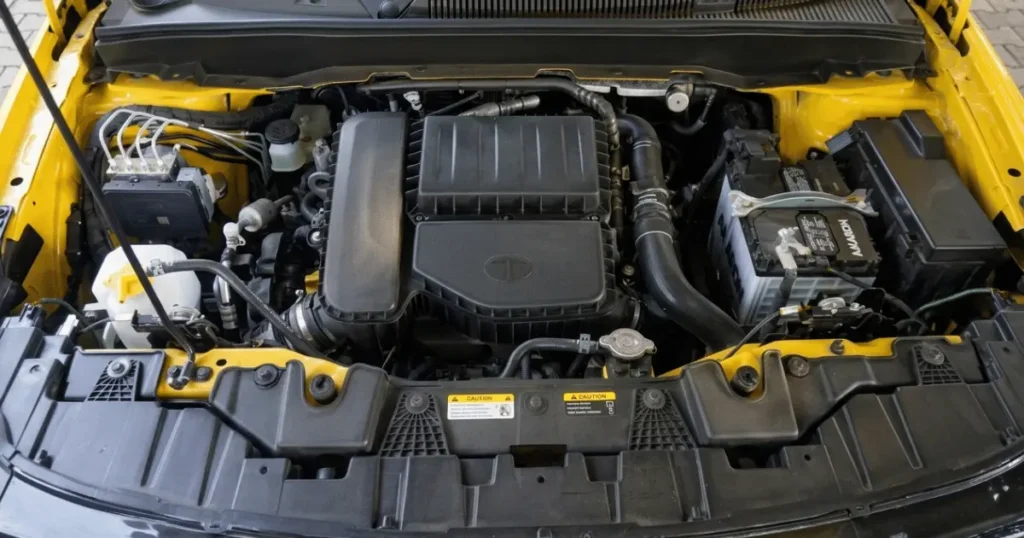
1.5L Kryojet diesel engine
The Tata Sierra is expected to be powered by Tata Motors’ refined 1.5-liter Kryojet diesel engine, and this engine is built with a clear focus on delivering strong real-world performance rather than just impressive numbers on paper. It is a 1497 cc, four-cylinder, turbocharged diesel unit that uses a modern common-rail direct injection system. This technology allows fuel to be injected at very high pressure with precise timing, which improves combustion efficiency, enhances power delivery, and also helps in controlling emissions. The turbocharger plays a crucial role by forcing more air into the combustion chamber, while the intercooler cools this compressed air, increasing its density and allowing better combustion. Together, these components ensure that the engine produces strong torque without needing a larger displacement.On paper, the engine is expected to produce around 116 to 118 PS of power at 4000 rpm, but the real strength of this engine lies in its torque output. It generates approximately 260 Nm in the manual variant and up to 280 Nm in the automatic version, with this torque available from as low as 1500 rpm and continuing smoothly up to around 2750 rpm. This wide torque band is what makes the engine feel powerful in everyday driving conditions. Instead of needing to push the engine to higher RPMs, the driver can access strong pulling power even with light acceleration. This characteristic becomes especially useful in city traffic, where frequent acceleration and deceleration are required, and on highways, where overtaking needs to be quick and effortless.The engine is expected to be paired with both a 6-speed manual and a 6-speed automatic transmission. With the manual gearbox, the driver gets full control over gear selection, which can help in extracting better mileage and making the most of the available torque. The gear ratios are likely to be tuned in a way that supports low-end performance, meaning the vehicle can move easily even in higher gears at low speeds. The automatic variant, which will most likely be a torque converter unit, focuses more on comfort and smoothness. It works particularly well with diesel engines because of their torque-rich nature, allowing for seamless gear shifts without sudden jerks, which is ideal for daily commuting in heavy traffic.Fuel efficiency is one of the strongest advantages of this diesel engine. Under standard testing conditions, the Sierra diesel is expected to deliver around 18 to 19 km/l, which makes it quite efficient for a vehicle of its size. In real-world conditions, the mileage will vary depending on driving style and environment, but in city usage, it is likely to return around 14 to 16 km/l, while on highways, it can go up to 18 km/l or even more if driven smoothly. This efficiency comes from the inherent nature of diesel engines, which operate at higher compression ratios and extract more energy from each drop of fuel. Additionally, because the engine produces strong torque at low RPM, it does not need to work as hard, which further improves fuel economy.
Tata Sierra 1.5L Hyperion TGDi Turbo-Petrol Engine
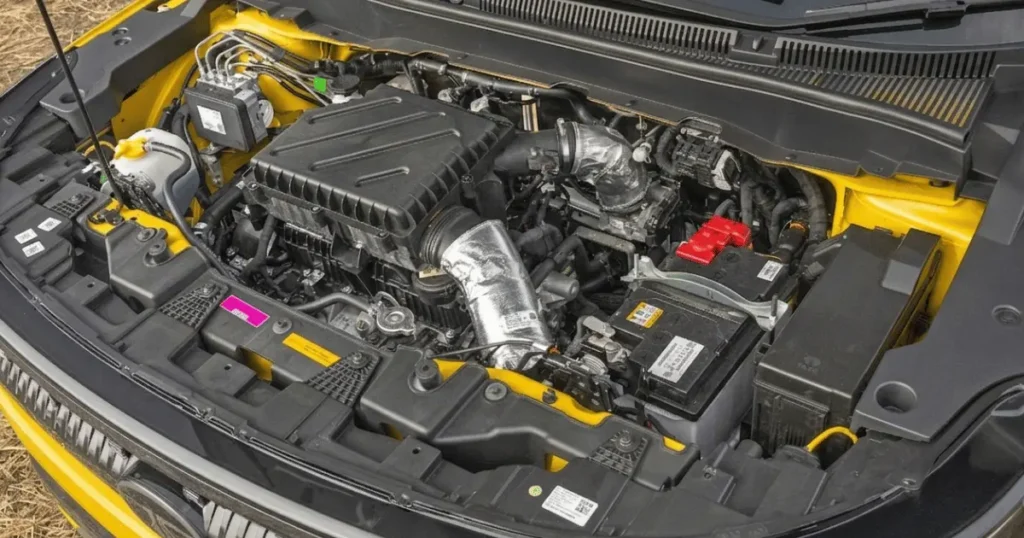
The Tata Sierra is expected to feature Tata Motors’ most advanced petrol powertrain yet—the 1.5-liter Hyperion TGDi turbo-petrol engine. This engine represents a major step forward for Tata because it has been developed in-house with a clear focus on combining performance, refinement, and modern efficiency technologies. Unlike older naturally aspirated petrol engines, this unit is built to deliver strong performance across all driving conditions while maintaining smoothness and everyday usability.
This engine is a 1498 cc, four-cylinder, all-aluminum unit equipped with turbocharging and direct fuel injection. The use of an all-aluminium construction helps reduce overall engine weight, which improves efficiency and vehicle balance. The TGDi (Turbocharged Gasoline Direct Injection) system injects fuel directly into the combustion chamber at very high pressure, ensuring precise fuel-air mixing. This results in better combustion efficiency, improved power output, and lower emissions compared to traditional fuel injection systems.The turbocharger plays a crucial role in transforming the engine’s character. Instead of relying on engine size for power, the turbo forces more air into the cylinders, allowing the engine to produce significantly higher output. In this engine, Tata has used an advanced turbo setup, including features like variable geometry control and an intercooler, which helps maintain consistent performance even under high load conditions.In terms of performance figures, the Hyperion engine in the Sierra produces around 158–160 PS of power at 5000 rpm and 255 Nm of torque, available from approximately 1750 rpm and sustained up to 4000 rpm. What makes these numbers important is not just their value but how they are delivered. The torque band is wide and accessible, meaning the engine feels responsive even at low speeds while still maintaining strong mid-range performance. This ensures that the vehicle feels quick during overtakes and stable during highway cruising.Unlike diesel engines that focus on low-end torque, this turbo-petrol engine offers a more linear and progressive power delivery. At lower speeds, the engine feels smooth and refined, making it ideal for city driving. As you press the accelerator harder, the turbo kicks in and delivers a noticeable surge of power, which makes acceleration feel energetic without being too aggressive. The engine is tuned in a way that balances performance with comfort, ensuring that it does not feel jerky or unpredictable.The Hyperion engine is expected to be paired primarily with a 6-speed torque converter automatic transmission, which complements its refined nature. This gearbox ensures smooth gear shifts and reduces driver fatigue, especially in heavy traffic conditions. The combination of a turbo-petrol engine and automatic transmission makes the Sierra particularly appealing for urban users who want convenience along with performance.When it comes to mileage, turbo-petrol engines generally consume more fuel than diesel engines, but they offer better refinement and performance. The Tata Sierra’s 1.5 TGDi engine is expected to deliver an ARAI-certified mileage of around 13–14 km/l. In real-world conditions, the efficiency will vary depending on driving style. In city traffic, you can expect around 10–12 km/l, while on highways, it can reach 14–16 km/l with steady driving. This is typical for a turbocharged petrol SUV of this size and performance level.The real strength of this engine lies in its driving experience. When you start the vehicle, the engine feels quiet and refined, with minimal vibrations entering the cabin. In city driving, it behaves smoothly, allowing easy acceleration without requiring too much throttle input. The automatic gearbox works well to mask turbo lag, ensuring that the vehicle moves forward without hesitation.
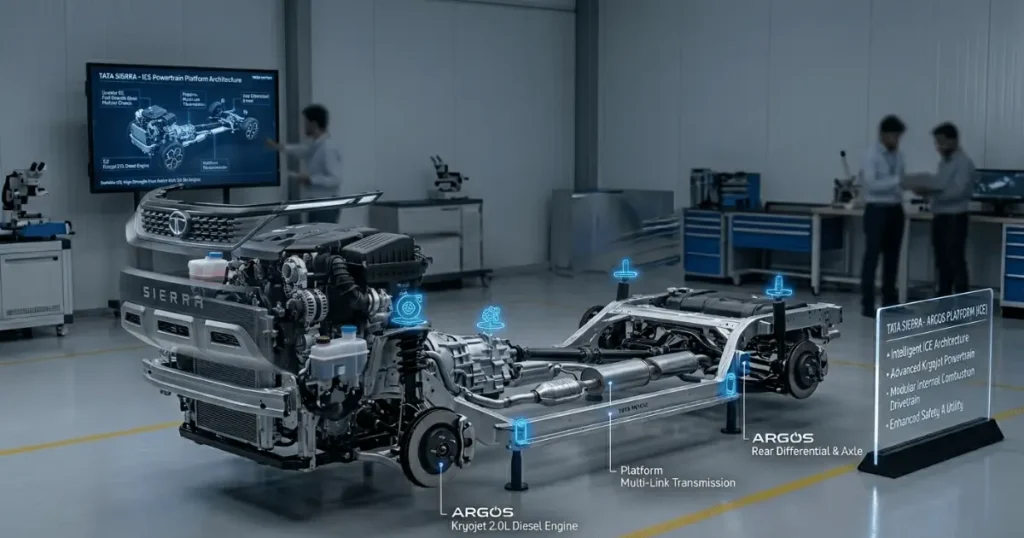
Tata Sierra Platform
The new Tata Sierra is built on Tata Motors’ completely new ARGOS platform, and this platform is one of the most important elements that defines how the vehicle feels, performs, and evolves in the future. ARGOS stands for All-Terrain Ready, Omni-Energy, and Geometry Scalable Architecture, and unlike older platforms that were designed for a single purpose, this one has been engineered with flexibility, strength, and future adaptability as its core philosophy.When you look at the platform deeply, it is essentially a modern monocoque chassis, which means the body and frame are integrated into a single structure rather than being separate like in traditional ladder-frame SUVs. This construction plays a major role in improving structural rigidity. A rigid structure ensures that the car feels stable at high speeds, absorbs impacts better during crashes, and reduces vibrations inside the cabin. This is why modern SUVs like the Sierra feel more refined and comfortable compared to older generation vehicles.One of the most important aspects of the ARGOS platform is its “Omni-Energy” capability, which means it has been designed from the beginning to support multiple types of powertrains. This includes petrol, diesel, and fully electric setups without requiring major structural changes.In real-world terms, this is a huge advantage. For example, in the petrol and diesel versions, the platform accommodates a traditional engine bay and drivetrain layout, while in the electric version, it can integrate a large battery pack within the floor. This not only improves space efficiency but also lowers the center of gravity, making the vehicle more stable and better to drive.The platform is also geometry scalable, which means Tata can adjust its dimensions—length, width, and wheelbase—depending on the vehicle segment. The ARGOS architecture is designed to support SUVs ranging roughly from 4.3 metersmeters to 4.6 meters in length, placing the Sierra perfectly in the mid-size SUV category while also allowing future models to be built on the same base.This scalability is not just about size; it directly impacts interior space. A longer wheelbase allows more legroom, while better packaging ensures more usable cabin and boot space without increasing the overall footprint unnecessarily.Another critical strength of this platform is its “All -Ter rain Ready” engineering. While the Sierra is not a hardcore off-roader, the platform is tuned to handle Indian road conditions effectively. It is designed to absorb rough surfaces, potholes, and uneven terrain without compromising passenger comfort. The suspension geometry, combined with a strong chassis, ensures that the vehicle remains stable even on bad roads. This is particularly important in India, where road quality can vary significantly.The ARGOS platform also plays a major role in ride quality and handling balance. Because of its rigid structure and optimized weight distribution, the Sierra can deliver a smooth ride over bumps while maintaining stability at higher speeds. The platform allows engineers to fine-tune suspension settings in a way that balances comfort and control, which is essential for an SUV that is expected to perform both in city traffic and on highways.
Safety is another area where this platform makes a big difference. A strong monocoque structure allows better energy absorption during collisions, improving crash protection for passengers. The platform is designed to support advanced safety features like multiple airbags, electronic stability control, and ADAS systems without structural limitations. This ensures that the Sierra is not just comfortable but also built to meet modern safety expectations.From a broader perspective, the ARGOS platform sits strategically between Tata’s existing architectures. It is positioned above the ATLAS platform and below the more premium OMEGA architecture derived from Jaguar Land Rover, which means it combines affordability with advanced engineering.This positioning allows Tata to offer a premium experience without making the vehicle too expensive, which is a key factor in the Indian market. Meters-generation
Tata Sierra Dimensions & practical Space
The Tata Sierra has been designed with a very clear philosophy—maximize usable space without making the vehicle unnecessarily large. When you look at its dimensions on paper, it falls into the mid-size SUV category, but the way Tata has engineered the proportions makes it feel much more spacious than what the numbers alone suggest.
The Sierra measures approximately 4340 mm in length, 1841 mm in width, and 1715 mm in height, with a long wheelbase of 2730 mm.
These numbers are extremely important because they directly influence how the space inside the vehicle is experienced. The length places it in the same segment as popular mid-size SUVs, but the long wheelbase is what truly defines the Sierra’s practicality. A longer wheelbase means the distance between the front and rear wheels is extended, and this extra length is used to create more legroom inside the cabin rather than just increasing exterior size.
When you step inside the Sierra, the first thing you notice is how open and airy the cabin feels. This is not just because of the dimensions but also due to Tata’s intelligent packaging. The wide body of 1841 mm plays a crucial role in improving shoulder room. This means that even three passengers sitting in the second row do not feel cramped, which is a common issue in many SUVs of this segment. The seating layout has been optimized in a way that passengers get proper individual space rather than just being accommodated.
The height of the vehicle, combined with its upright stance, ensures excellent headroom. Even taller passengers can sit comfortably without feeling restricted. This becomes especially important during long journeys, where comfort is directly linked to how much natural sitting posture the vehicle allows. The Sierra’s tall design also makes entry and exit easier, which adds to everyday practicality.
One of the biggest advantages of the Sierra’s design is how it uses its unique glasshouse. The large windows and extended rear glass area allow more natural light to enter the cabin, making it feel significantly larger than it actually is. This design element reduces the sense of confinement, especially for rear passengers, and creates a more premium and relaxed environment.
The rear seat experience is expected to be one of the strongest highlights of the Sierra. Thanks to the long wheelbase, passengers get generous legroom, and the flat floor design further improves comfort for the middle passenger. The seating is likely to be designed with proper cushioning and support, making it suitable for long-distance travel. In practical terms, this means the Sierra is not just a driver-focused SUV but also a family-oriented vehicle where rear seat comfort is equally important.
Boot space is another area where the Sierra shows strong practicality. Depending on the configuration, it offers around 350 liters to as much as 622 liters of luggage capacity, which is quite impressive for this segment.
What matters more than the number is usability. The boot is expected to have a wide opening and a low loading lip, which makes it easier to load and unload heavy luggage. For long trips, this kind of practicality makes a big difference because you can carry more without compromising passenger comfort.
The Sierra also offers a ground clearance of around 205 mm, which is ideal for Indian road conditions.
This ensures that the vehicle can easily handle speed breakers, rough patches, and uneven terrain without scraping the underbody. At the same time, the ground clearance is balanced in a way that it does not negatively affect stability, which is important for highway driving.
Another important aspect of practicality is seating configuration. The Sierra is expected to be a 5-seater SUV, and this decision is very intentional. Instead of adding a third row and compromising space, Tata has focused on maximizing comfort for five occupants. This results in better legroom, more shoulder space, and a significantly larger boot, making the vehicle more practical for real-world usage.
In everyday life, these dimensions translate into a vehicle that feels easy to drive in the city while still offering enough space for highway travel and family trips. The turning radius and overall footprint are manageable, so the Sierra does not feel bulky in traffic, yet inside, it offers the comfort of a larger SUV.
What truly stands out about the Sierra is not just its size, but how intelligently that size has been used. Every millimeter of the vehicle contributes to improving passenger comfort, storage space, and overall usability. It is this balance between exterior dimensions and interior space that makes the Sierra feel practical, modern, and well-suited for Indian conditions.
Tata sierra Features
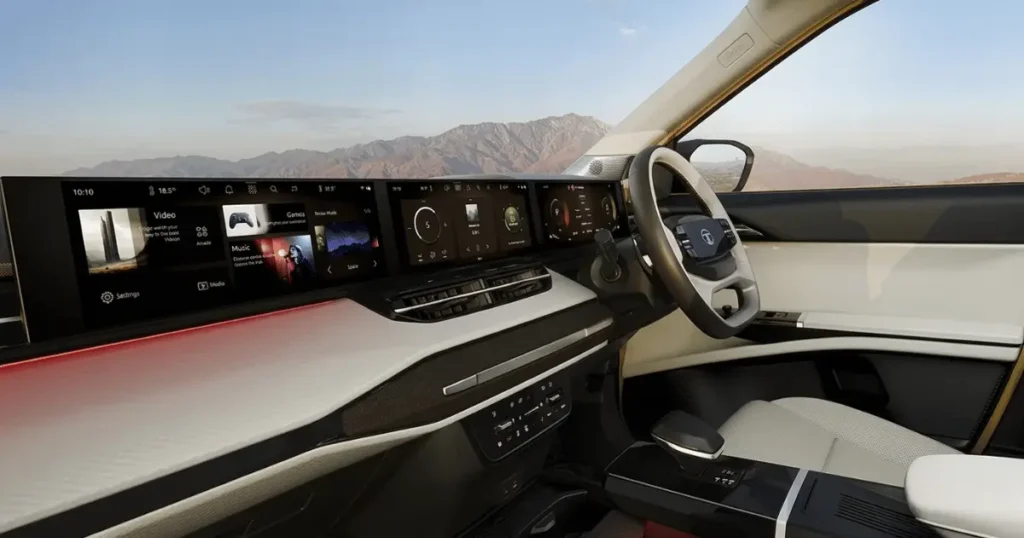
The triple-screen layout inside the Sierra completely changes the way you interact with the car. Instead of a traditional dashboard, Tata has integrated three digital displays—one for the driver, one for infotainment, and one for the co-passenger. This setup creates a futuristic cockpit feel where information is always visible and easily accessible. The driver display shows speed, navigation, and vehicle data in a clean format, while the central touchscreen controls media, navigation, and settings. The co-passenger screen adds a new dimension, allowing the passenger to interact with media or navigation without disturbing the driver. This kind of layout is usually seen in luxury cars, and it makes the cabin feel modern and high-tech.
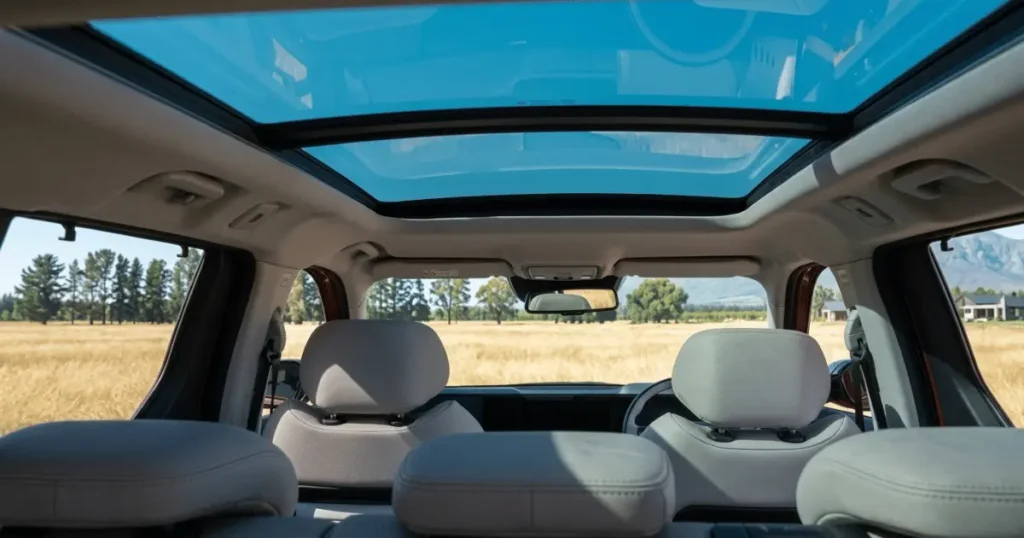
The panoramic sunroof in the Sierra is not just a visual feature but a functional one that completely transforms the cabin experience. It stretches across a large portion of the roof, allowing natural light to flood the interior. This makes the cabin feel more spacious and less confined, especially for rear passengers. During long drives, this openness reduces fatigue and creates a more relaxing environment. It also enhances the premium feel of the vehicle, making it comparable to higher-end SUVs.
The ventilated front seats are designed specifically for comfort in Indian weather conditions. These seats use built-in fans to circulate air through the seat material, preventing heat buildup during hot days. Instead of sticking to the seat due to sweat, the driver and front passenger remain cool and comfortable even in peak summer. This feature becomes extremely valuable during long drives, where comfort directly affects driving fatigue.
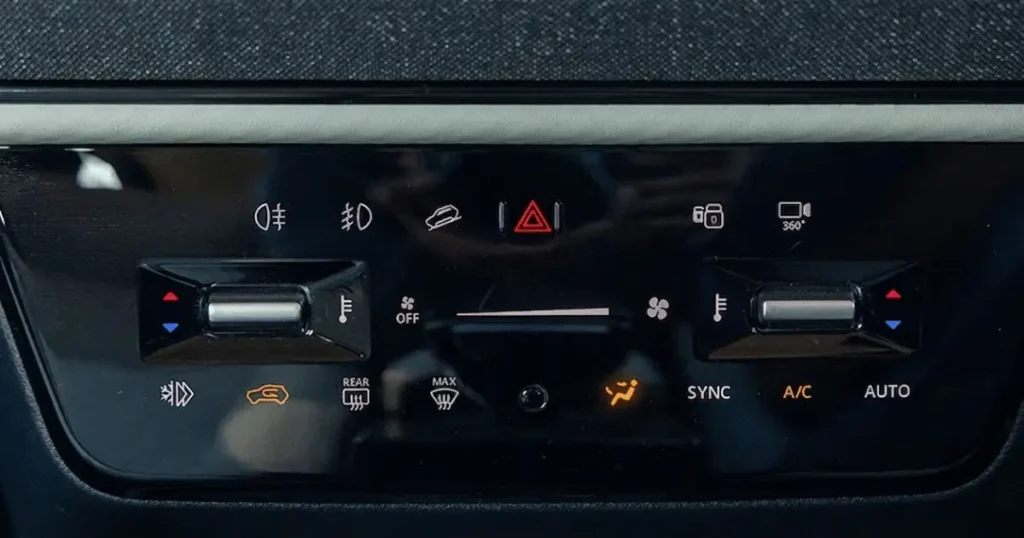
The dual-zone climate control system allows the driver and front passenger to set different temperature preferences. This might seem like a small feature, but in real life, it makes a big difference. For example, one person can prefer cooler air while the other prefers a moderate temperature, and both can be comfortable at the same time. The system automatically maintains the selected temperature, reducing the need for constant manual adjustments.
The 360-degree camera system is one of the most practical features for everyday driving. It uses multiple cameras placed around the vehicle to create a bird’s-eye view of the surroundings. This makes parking in tight spaces much easier and safer, especially in crowded urban areas. It also helps in avoiding obstacles that may not be visible through mirrors alone, reducing the chances of scratches or minor accidents.
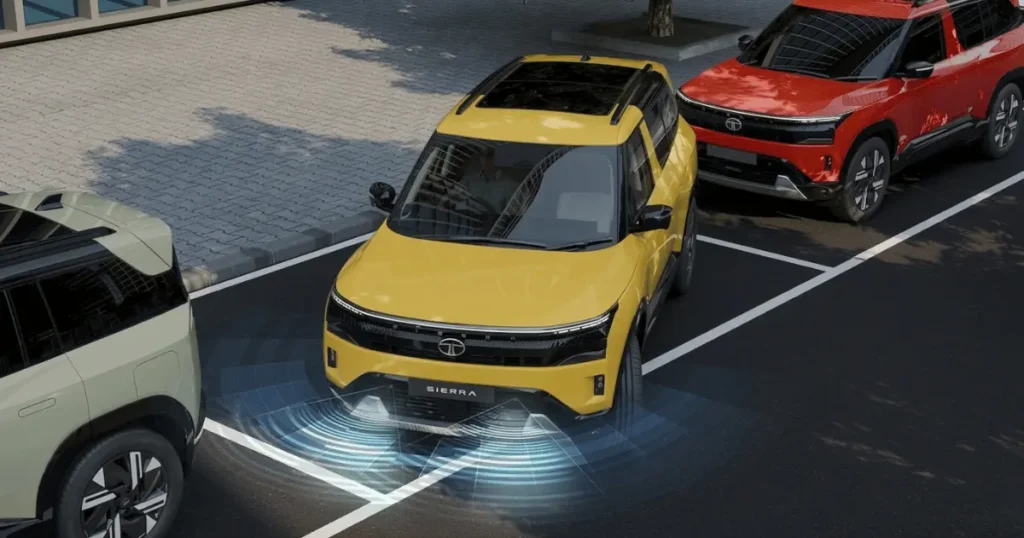
The Level 2 ADAS system in the Tata Sierra represents a major step toward bringing intelligent driving assistance into everyday Indian driving conditions. This system combines cameras, radar sensors, and advanced software to continuously monitor the road, traffic, and driver behavior, creating a semi-automated driving experience that enhances both safety and convenience. Unlike basic driver aids, Level 2 ADAS can simultaneously control steering, acceleration, and braking under certain conditions, although the driver must remain fully attentive and ready to take control at any moment.
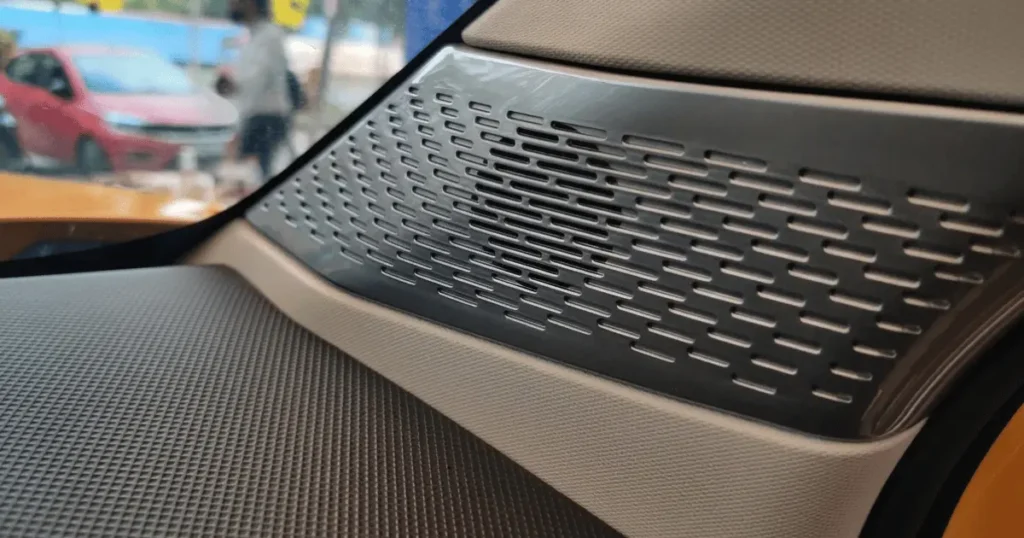
The premium JBL 12-speaker sound system with a soundbar setup transforms the cabin into an entertainment space. Unlike regular car audio systems, this setup delivers deep bass, clear vocals, and a surround sound experience. Whether you are listening to music or watching content on the screen, the audio quality enhances the overall experience and makes long drives more enjoyable.
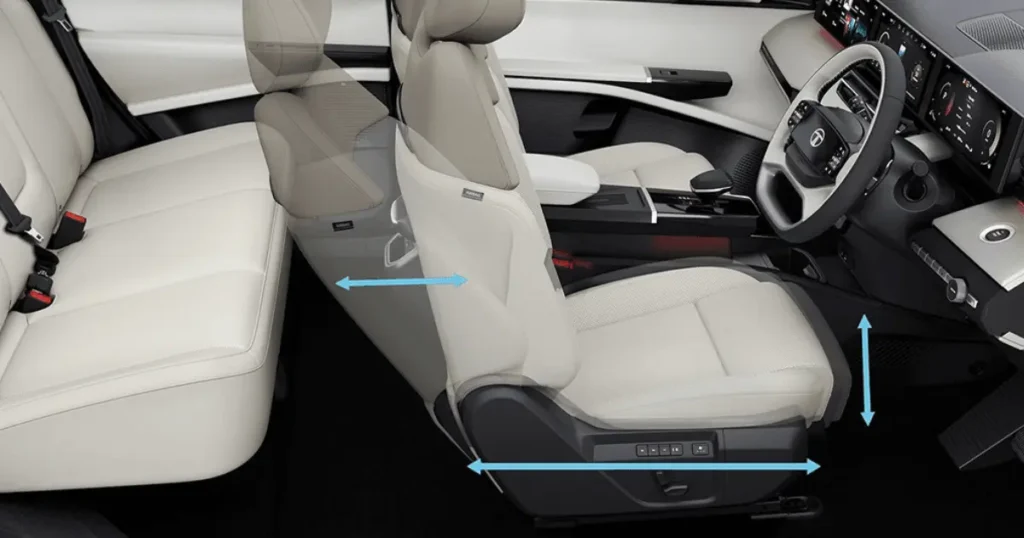
The powered and ventilated front seats add another layer of convenience and luxury. With electric adjustments, you can easily find the perfect driving position without manual effort. This is particularly useful when multiple drivers use the same car, as seat positions can be adjusted quickly. Combined with ventilation, it ensures both comfort and convenience at the same time.
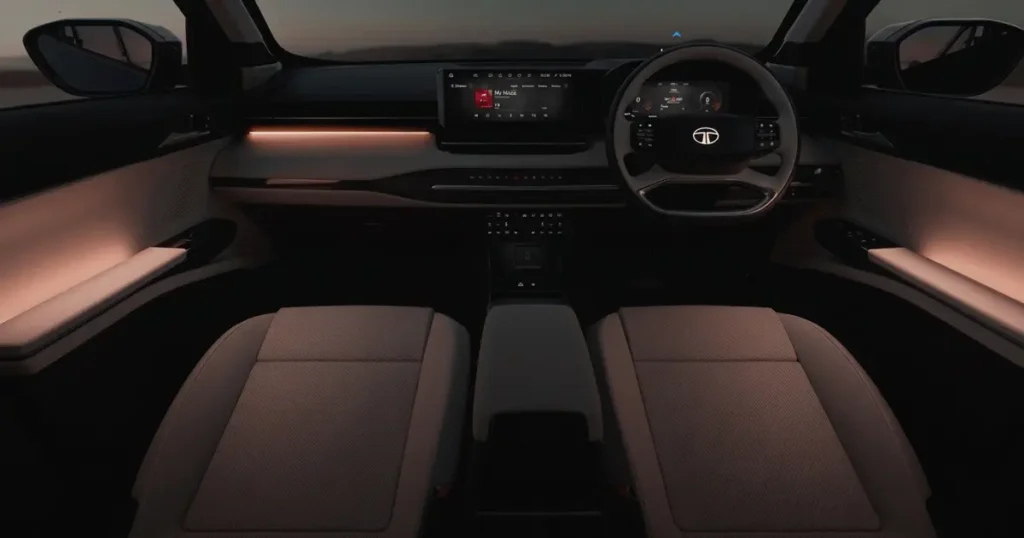
The ambient lighting system inside the Sierra enhances the overall cabin atmosphere. It uses soft, customizable lighting across the dashboard and doors to create a premium environment, especially during night driving. This feature is not just about looks; it also reduces eye strain and improves visibility inside the cabin without being distracting.
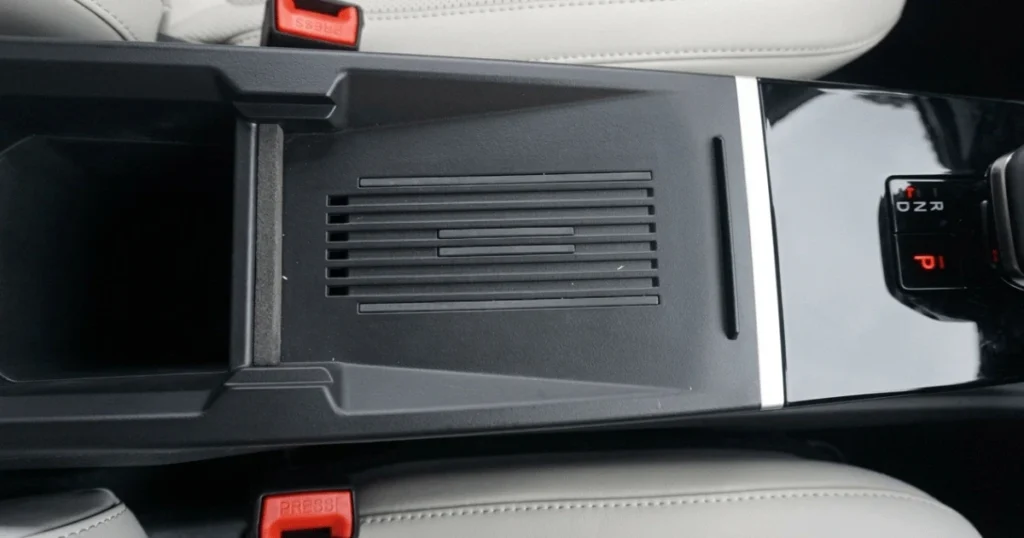
reduces eye strain and improves visibility inside the cabin without being distracting.The wireless charging feature eliminates the need for cables, making it easier to keep your smartphone charged while driving. You simply place your phone on the charging pad, and it starts charging automatically. This adds convenience, especially during long journeys where navigation and media usage can drain battery quickly.The multiple drive modes in the Sierra allow the vehicle to adapt to different driving conditions. Whether you are driving in the city, on highways, or on slightly rough terrain, these modes adjust throttle response, steering feel, and sometimes traction control to suit the situation. This makes the vehicle more versatile and improves overall driving confidence.
The safety package in the Sierra is designed to provide complete protection. It includes multiple airbags, electronic stability control, tyre pressure monitoring system, and parking sensors. These systems work together to prevent accidents and protect passengers in case of a collision. The strong focus on safety ensures that the Sierra is not just comfortable but also secure for families.
The connected car technology allows you to control and monitor the vehicle remotely using a smartphone app. You can check vehicle status, lock or unlock doors, track location, and even control certain functions remotely. This feature adds convenience and also improves security by keeping you connected to your vehicle at all times.
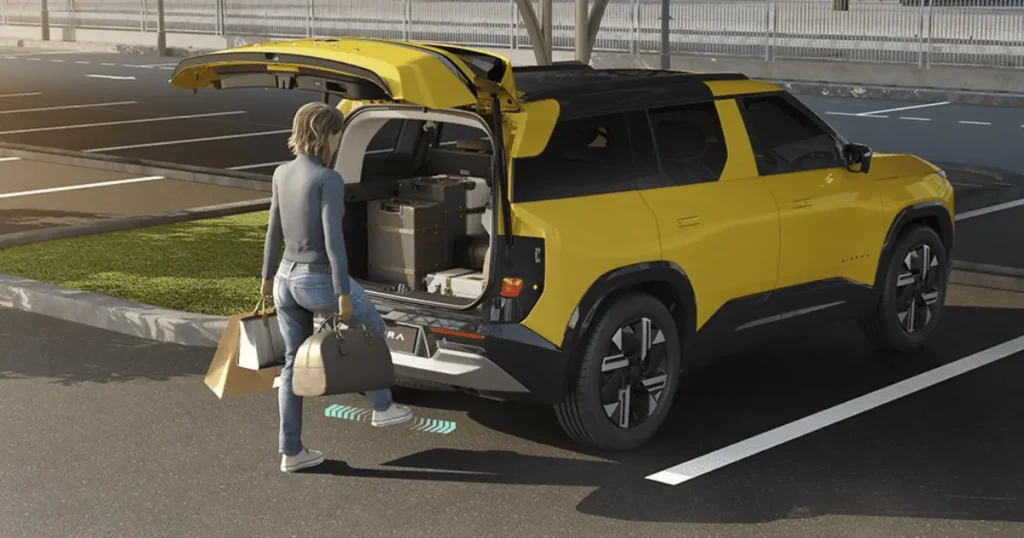
The powered tailgate is another practical feature that improves usability. Instead of manually opening the boot, you can open or close it with the press of a button. This becomes especially useful when your hands are full with luggage or shopping bags.
The rain-sensing wipers and automatic headlights are small but extremely useful features. The wipers automatically activate when rain is detected, and the headlights turn on in low-light conditions. These features reduce driver effort and improve safety by ensuring optimal visibility at all times. —Human